

When Should You See a Dentist About Your Teeth?
22 October 2026 | General Dentistry, Oral Health, Preventative Dentistry
See a dentist if tooth pain persists, a tooth breaks or you notice an unexplained change in your mouth. Facial swelling, dental injuries and severe pain need prompt advice. Dentists assess teeth even when they do not hurt, because some problems are not obvious at home.
For someone in Geelong deciding whether to book, the useful distinction is between a medical emergency, a dental concern that needs prompt assessment and a routine visit. The guide below can help you describe your symptoms and understand the next step, without trying to diagnose the cause yourself.
How soon should you seek care?
Use this table as a starting point. If you are unsure how serious a symptom is, contact a dental practice and explain what has changed rather than waiting for it to become worse.
| What you notice | Suggested next step |
|---|---|
| Difficulty breathing or swallowing with mouth, face or neck swelling | Call 000 for emergency medical assistance |
| A knocked-out adult tooth | Seek emergency dental care immediately |
| Facial swelling, severe toothache, fever with dental pain or a significant dental injury | Contact a dentist promptly, ideally the same day |
| Recurring sensitivity, pain when biting, a broken filling or bleeding gums | Arrange a dental assessment; ask about timing when booking |
| An ulcer lasting more than two weeks, a persistent lump or a red or white patch | Arrange assessment with a dentist or GP |
| No symptoms, but your recommended review is due | Book a routine appointment based on your individual recall plan |
Pain intensity alone does not tell you how serious a dental problem is. A damaged tooth may feel comfortable, while a sensitive tooth may have several possible causes. The pattern, duration and associated symptoms all matter.
When to seek emergency help
Dental swelling becomes a medical emergency if it affects breathing or swallowing. Call 000 rather than waiting for a dental appointment. Major facial trauma or heavy bleeding that does not stop also warrants emergency medical assessment.
For facial swelling without breathing problems, severe toothache or dental pain accompanied by fever, contact a dentist promptly. Describe whether the swelling is increasing and whether you feel generally unwell.
Healthdirect’s information about toothache explains possible causes and when to seek care. Pain relief may make symptoms more manageable, but it does not treat the underlying cause. A pharmacist can advise on medicines suitable for your circumstances while you arrange assessment.
If an adult tooth is knocked out
A knocked-out adult tooth needs immediate dental attention. Handle it by the crown, the part normally visible above the gum, rather than the root. If dirty, gently rinse it briefly in milk or saline without scrubbing.
If it can be gently returned to its socket, do so without forcing it. Otherwise, keep it in milk and seek emergency dental care immediately. Do not let it dry out or delay seeking help while trying to reposition it.
Do not put a knocked-out baby tooth back into the socket. Seek dental advice for the child, even if the bleeding settles. If there are signs of a head injury or other serious trauma, medical assessment is also needed.
Changes in your teeth that deserve an appointment
When dentists examine teeth, they consider more than whether something hurts at that moment. A new symptom, a recurring problem or a change after an injury can all help guide assessment.
Sensitivity that is new, recurring or lingering
A brief reaction to cold food is different from pain that continues after the cold is gone. Neither pattern gives you a diagnosis, but it is useful information to share.
Sensitivity can relate to exposed tooth surfaces, decay, cracks or other causes. Arrange an appointment if it is new, keeps returning, affects one particular tooth or interferes with eating and drinking.
Mention whether heat, cold, sweet foods or brushing trigger it. Spontaneous pain, pain that wakes you at night or discomfort that continues after the trigger has stopped deserves prompt advice. A sensitive-tooth toothpaste may help some causes, but it should not replace assessment of persistent symptoms.
Pain when biting, chips or changes after an injury
Pain when biting can occur with a crack, a damaged filling or other dental problems. Tell the practice whether it happens as you bite down or as you release the bite, and whether you can identify a particular tooth.
A chipped tooth or lost filling should be assessed even if it is painless. Until your appointment, avoid chewing hard foods on that area and do not try to repair the tooth with household adhesives.
Also mention a tooth that becomes darker, feels loose or sits differently after a knock. Lack of pain does not rule out an injury that needs examination.
Bleeding gums, persistent odour or mouth changes
Repeated gum bleeding is worth discussing, particularly if it occurs during gentle brushing or cleaning between teeth. Gum inflammation is one possible cause, but your dentist needs to assess what is happening.
Persistent bad breath despite regular cleaning can also justify an appointment. It may have an oral cause or require advice from another healthcare professional.
Do not assume a mouth ulcer is caused by a tooth. An ulcer lasting more than two weeks, a persistent lump or a red or white patch should be checked by a dentist or GP. The Victorian Government’s information about mouth ulcers outlines when professional assessment is appropriate.
What to tell the practice when you call
You do not need to know the diagnosis before booking. A clear description helps the practice decide how soon you should be assessed. Dentists use the history of your teeth symptoms alongside the examination, so a few notes can be useful.
Try to explain:
- When it started: Include whether it followed an injury, a meal or recent dental treatment.
- What brings it on: Mention biting, hot or cold drinks, brushing or pain without an obvious trigger.
- How long it lasts: Explain whether it settles quickly, lingers or comes and goes.
- What else has changed: Mention swelling, fever, bleeding, a bad taste or difficulty opening your mouth.
- How it affects you: Say if you cannot eat comfortably, sleep or manage normal activities.
Tell the practice about relevant medical conditions, medicines and any pain relief you have taken. If symptoms change while you are waiting, contact them again rather than assuming the original appointment timing still suits.
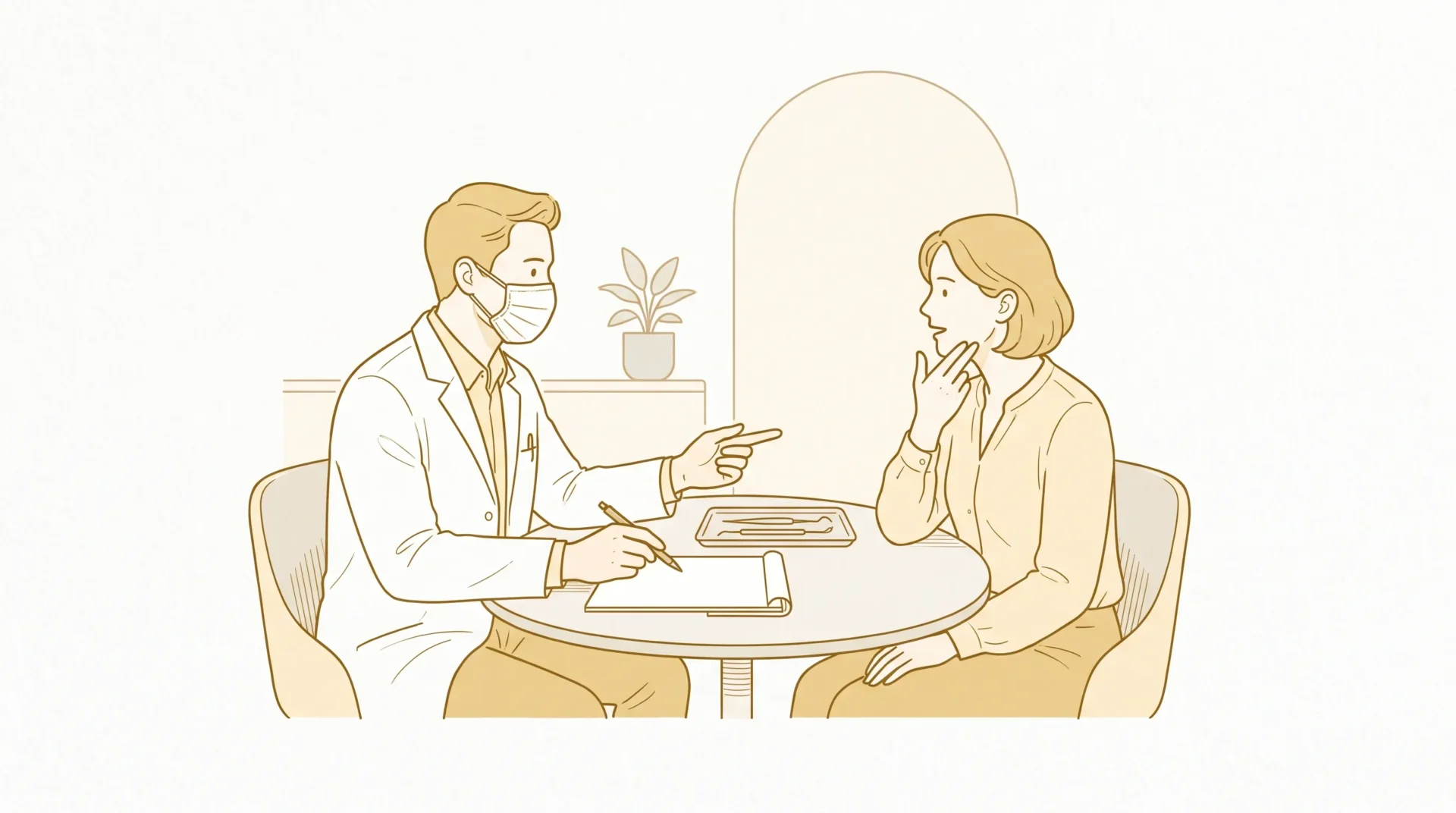
Should you see a dentist if your teeth feel fine?
Yes, routine assessment can be appropriate even without symptoms. Early tooth decay and gum disease may not cause noticeable discomfort, and home inspection cannot show everything a dentist can assess.
There is no single check-up interval that suits everyone. Your dentist can recommend a review schedule based on your oral health, previous dental problems, medical history and risk factors. If you cannot remember your last visit, ask the practice about arranging an assessment rather than assuming you need a particular treatment.
Changes in circumstances can also be worth mentioning, such as persistent dry mouth or a new medicine. Do not stop prescribed medicines yourself.
For a fuller explanation of routine visits, see what a dental check-up and clean usually includes.
How dentists assess teeth before recommending treatment
An appointment usually begins with your concerns and relevant health history. The dentist may examine your teeth, gums and other areas of your mouth, then use specific checks to investigate the symptom you described.
X-rays may be recommended when clinically justified. They are not automatically required at every appointment, and your dentist can explain what information they would provide.
You can ask what the examination suggests, what remains uncertain and whether further assessment is needed. If you feel anxious, have a sensitive gag reflex or need breaks, mention this before the examination begins.
Our guide to what to expect when visiting a Geelong dentist explains the appointment process in more detail.
An assessment does not automatically mean treatment
The next step depends on the findings. Monitoring, changes to home care or preventive measures may be appropriate in some circumstances. Other problems may need treatment or referral.
For example, a damaged tooth might be managed with a filling, a crown or another approach, depending on the damage and remaining tooth structure. Understanding when a dental crown may be considered can help you prepare questions, but an examination is needed to determine suitability.
All dental procedures carry potential benefits and risks. Before agreeing to treatment, ask about alternatives, likely costs, recovery and what could happen if treatment is delayed. Experiences and outcomes vary between patients.
If your concern is appearance rather than discomfort, it is also reasonable to discuss it. Normal differences in tooth colour or shape do not necessarily need treatment, and choosing no cosmetic treatment is a valid option.
Frequently asked questions
Can I wait if my toothache goes away? A toothache settling does not necessarily mean its cause has resolved. Contact a dentist if the pain was severe, keeps returning or occurred with swelling, an injury or a broken tooth. Explain that the pain has stopped so the practice can advise on timing.
Do bleeding gums mean I should stop brushing? Usually, you should continue gentle brushing with a soft toothbrush and clean between your teeth. Arrange an assessment if bleeding persists or recurs. Your dentist can check the cause and show you a suitable cleaning technique.
Should I book a check-up or an emergency appointment? Describe the symptoms when you contact the practice rather than trying to choose the appointment type yourself. Swelling, severe pain, a knocked-out tooth or significant trauma needs prompt advice. Breathing or swallowing difficulties associated with swelling require emergency medical help.
Do I need treatment if my teeth look uneven or discoloured? Not necessarily. Appearance alone does not establish a dental health problem. A dentist can assess your teeth and explain whether monitoring, general dental care or an optional cosmetic approach may be suitable.
Discuss your concerns with Geelong Dental Centre
If you have noticed a change in your teeth or are unsure when your next review is due, you can arrange an appointment with Geelong Dental Centre. Describe your concerns when booking so the team can advise on appointment timing. An examination can help clarify the cause and which options may be appropriate.
Disclaimer
The information provided on this website is for general informational and educational purposes only. It is not intended to replace professional dental advice, diagnosis or treatment. Dental needs and treatment outcomes vary between individuals. Always seek advice from a qualified dental practitioner regarding your specific circumstances before making decisions about your oral health or treatment. A consultation and clinical assessment are required to determine which treatment options may be suitable for you. All dental procedures carry potential risks and benefits, which will be discussed with you before treatment.