

What to Expect at a Dentist’s Clinic for Your First Visit
28 September 2026 | Children's Dentistry, General Dentistry, Preventative Dentistry
A first visit to a dentist's clinic is usually about understanding your oral health, discussing any concerns and deciding what, if anything, needs attention. You should not feel pressured to agree to treatment on the spot. In most cases, the appointment gives your dentist a chance to examine your teeth, gums and mouth, explain their findings in plain language and outline suitable next steps based on your individual situation.
If you have not been to a dentist for some time, feel nervous or are booking for a child, it can help to know what the visit may involve before you arrive. The details can vary depending on whether you are attending for a routine check-up, a sore tooth, a broken filling or a cosmetic concern.
What usually happens at a dentist's clinic on your first visit?
Your first appointment is generally a fact-finding visit. The dental team needs to understand your health, your dental history and your reason for booking before recommending care. This is also your opportunity to ask questions about symptoms, treatment choices, costs and timing.
A routine first visit commonly includes a discussion, an examination and, if clinically appropriate, dental X-rays or a professional clean. If you are attending with pain, swelling or dental trauma, the visit may focus on the urgent concern first rather than a full check-up and clean.
Before you arrive: forms and health information
Most clinics ask new patients to complete a medical and dental history form. This may include details about medications, allergies, pregnancy, heart conditions, diabetes, previous dental treatment and any concerns about dental anxiety. These questions are not just paperwork. They help your dentist plan care more safely and decide whether extra precautions may be needed.
At a dentist's clinic, this early information can also help your dentist understand what matters to you. For example, you may want to discuss bleeding gums, sensitivity, teeth grinding, missing teeth, appearance-related concerns or how often you need check-ups. If you have recent dental X-rays from another clinic, ask whether they can be transferred before your appointment.
The first conversation with the dental team
Before looking in your mouth, your dentist will usually ask what brought you in. If you are visiting Geelong Dental Centre for the first time, you may be asked about your previous dental experiences, any current symptoms and what you hope to get from the appointment.
Try to describe symptoms as clearly as you can. Helpful details include when the issue started, whether pain comes and goes, what triggers it and whether you have noticed swelling, bleeding, a loose tooth or a change in your bite. If you feel anxious, say so early. Your dentist can explain what they are doing before they do it and can pause when needed.
During this part of your first appointment at a dentist's clinic, you can also raise practical matters such as appointment length, likely fees and available payment options. Asking questions is a normal part of informed consent, which means understanding the potential benefits, risks, limitations and alternatives before choosing treatment.
What the oral examination may include
The examination is usually gentle and systematic. Your dentist may check your teeth, existing fillings or crowns, gums, bite, jaw joints, tongue, cheeks and the roof and floor of your mouth. They may use a small mirror and dental probe to see areas that are difficult to view clearly.
Your gums may be assessed for signs of inflammation or gum disease. This can involve measuring small spaces between the teeth and gums. You may also be asked about brushing, flossing, diet, smoking or vaping, dry mouth and grinding habits. These everyday factors can affect the risk of tooth decay, gum problems and tooth wear.
For children, the appointment is usually adapted to their age and comfort level. The dentist may count teeth, check development, look for early signs of decay and talk with parents or carers about brushing, fluoride toothpaste, diet and habits such as thumb sucking. Children do not always need lengthy treatment at a first visit.
If you want a more detailed explanation of what is commonly checked, Geelong Dental Centre has a helpful guide to what a dental check-up and clean usually includes.
X-rays, cleaning and other first-visit procedures
Dental X-rays are not required for every patient at every visit. Your dentist may recommend them if they need more information than they can see during the visual examination, such as decay between teeth, bone levels around teeth, infection near roots or the position of wisdom teeth. If X-rays are suggested, you can ask why they are needed and how they may affect your treatment options.
A dentist's clinic may also recommend a professional clean if plaque and calculus, also called tartar, are present. A clean can involve scaling to remove hardened deposits, polishing to smooth tooth surfaces and sometimes fluoride treatment depending on your risk factors. Some people notice temporary tenderness or sensitivity afterwards, especially if the gums were already inflamed.
| Part of the visit | What it may involve | Why it may be recommended |
|---|---|---|
| Health history | Medical conditions, medications, allergies and dental concerns | To support safer, more appropriate care |
| Oral examination | Checking teeth, gums, bite, soft tissues and previous dental work | To identify visible issues and risk factors |
| Dental X-rays | Small images of selected areas when clinically indicated | To see concerns not visible during the exam |
| Professional clean | Removal of plaque and tartar, polishing and home-care advice | To support gum health and oral hygiene |
| Treatment discussion | Explanation of findings, options, fees and timing | To help you make an informed decision |
For a closer look at this part of an appointment, you can read Geelong Dental Centre’s article on what happens during a professional teeth clean.
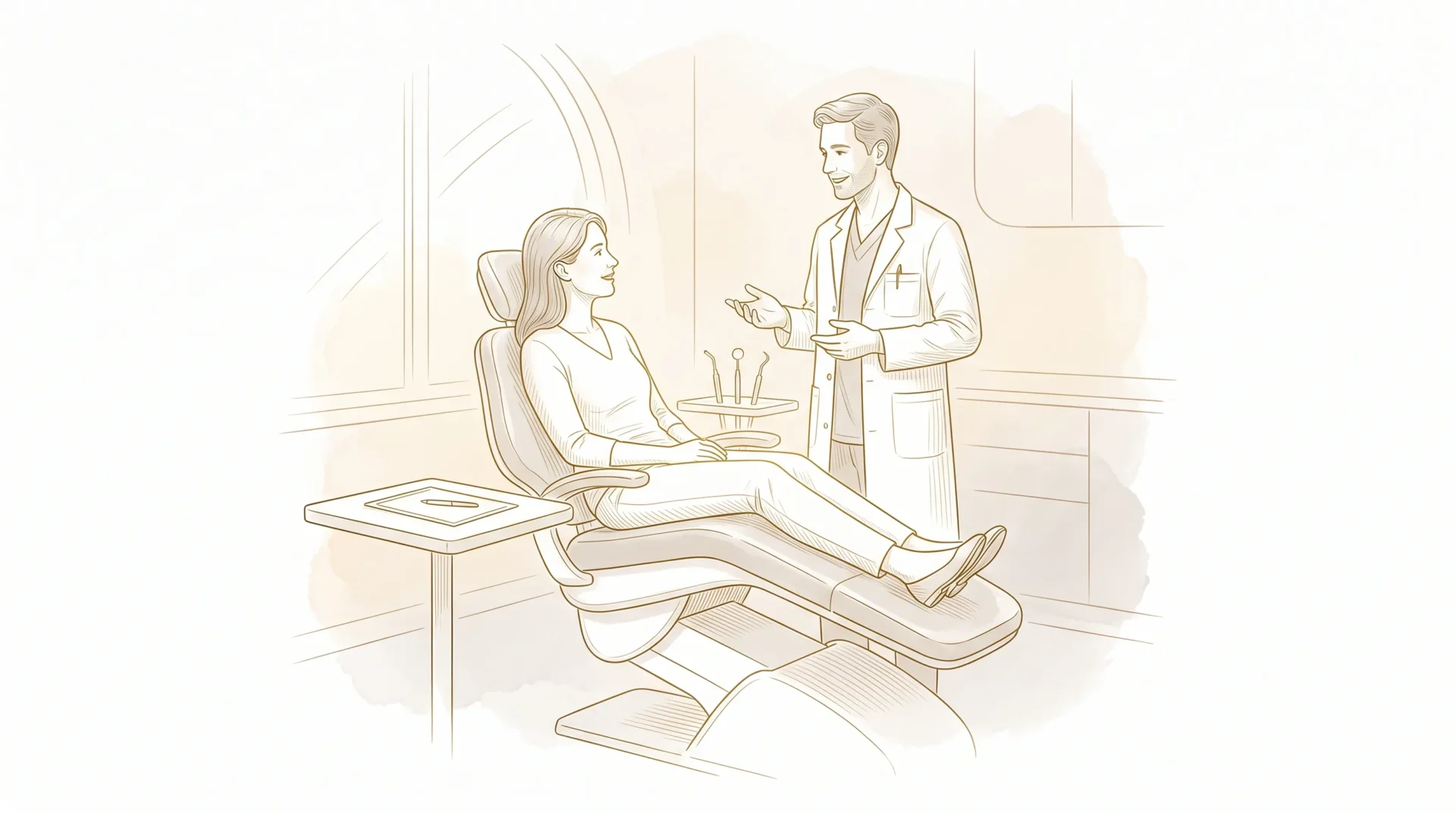
How findings and treatment options are discussed
After the examination, your dentist should explain what they found in a way you can understand. This may include showing you X-rays, using a mirror or discussing areas to watch. Not every finding needs immediate treatment. Some issues may be monitored, managed with home-care changes or reviewed at a later appointment.
If treatment is recommended, you can ask about the purpose of the treatment, what it involves, possible risks, expected appointment time, recovery considerations and alternatives. For example, a damaged tooth might have several possible approaches depending on how much tooth structure remains, your oral health, your preferences and your budget.
At a dentist's clinic, you should be given time to consider non-urgent treatment decisions. A written treatment plan or cost estimate may be provided for more involved care. For cosmetic dentistry, Invisalign, implants or All-on-4 treatment, an assessment is needed before suitability can be discussed, as outcomes and treatment experiences vary between patients.
Costs, consent and asking the right questions
Fees can vary depending on what is needed during the appointment. A routine check-up and clean is different from an emergency visit, a filling, root canal treatment or implant assessment. If you are unsure, ask for an estimate before treatment begins. If you have private health insurance, the amount covered depends on your fund, level of cover and annual limits.
Informed consent is an important part of dental care in Australia. Before treatment, your dentist should explain the nature of the procedure, the likely benefits, material risks and available alternatives, including the option of no treatment where appropriate. For significant or staged treatment, you may prefer time to review the plan before deciding.
You can also check whether a dental practitioner is registered through AHPRA’s public register. This is a practical step for anyone choosing a new dental provider in Geelong, Newtown, Geelong West, East Geelong, Belmont, Highton or elsewhere in Victoria.
If you feel nervous about your first visit
Dental anxiety is common and nothing to be embarrassed about. Some people feel worried because of past experiences, sensitive teeth, a strong gag reflex, cost concerns or uncertainty about what the dentist might find. Telling the dental team early can make the appointment easier to manage.
A dentist's clinic can often adjust communication during the appointment. You might agree on a hand signal to pause, ask for explanations before each step or request shorter appointments where clinically appropriate. For some procedures, your dentist may discuss anaesthetic or other options that may help you feel more comfortable, depending on what treatment is required and your medical history.
If you are bringing a child, keep explanations simple and positive without promising that nothing will feel uncomfortable. It is usually better to say the dentist will count and check their teeth, then answer questions honestly in age-appropriate language.
What to bring to your first appointment
A little preparation can make the visit smoother. If you have dental records, previous X-rays or a list of medications, bring them with you or ask the previous clinic about transferring them securely. If you have private health insurance, bring your membership card or app details.
Useful things to bring include:
- A list of current medications, supplements and allergies
- Details of medical conditions or recent surgery
- Any referral letters or previous dental X-rays if available
- Your private health insurance details, if you have cover
- A mouthguard, splint, denture, retainer or aligner you currently use
- Questions you want to ask about symptoms, treatment options or costs
Choosing a dentist's clinic close to home, work or school can also make ongoing care more manageable. The Australian Dental Association’s patient website, Teeth.org.au, explains that the timing of dental check-ups should be based on individual needs rather than a single schedule for everyone.
When your first visit should be booked sooner
Some dental symptoms are better assessed promptly rather than waiting for a routine appointment. You should contact a dental clinic if you have toothache that is not settling, facial swelling, a knocked-out or loosened adult tooth, dental trauma, pus, fever with dental pain or bleeding that does not stop after pressure.
If you are unsure whether your concern is urgent, phone the clinic and describe your symptoms. The team can advise whether an emergency appointment may be appropriate or whether a routine visit is suitable. If you have severe swelling affecting breathing or swallowing, seek urgent medical care.
For patients comparing options before booking, Geelong Dental Centre has a separate guide on choosing a dentist as a new patient.
Frequently asked questions
How long does a first dental visit usually take? Appointment length varies depending on whether you need a check-up, X-rays, a clean or assessment of a specific problem. When booking, ask how much time has been set aside and whether treatment is likely to be completed on the same day.
Will I need X-rays at my first appointment? Not always. Your dentist may recommend X-rays if they are clinically useful for diagnosis or treatment planning. You can ask why they are needed and what information they may provide.
Can I have a clean at my first visit? Often, but not in every case. If you have pain, complex gum concerns or another urgent issue, your dentist may prioritise assessment first and schedule cleaning or treatment separately.
What if I have not seen a dentist for years? You can still book an appointment. The first visit is usually about assessing your current oral health and discussing realistic options. Your dentist should explain findings without judgement and help you understand possible next steps.
Is a dentist's clinic suitable for cosmetic concerns too? Many dental clinics assess cosmetic concerns such as tooth colour, spacing, worn teeth or alignment. Suitability for whitening, bonding, veneers or aligner treatment depends on your oral health, goals and clinical assessment.
Arranging your first visit in Geelong
Your first appointment is a chance to understand your oral health, ask questions and consider your options without rushing non-urgent decisions. A dental examination can help determine the cause of symptoms and which care options may be appropriate for your circumstances.
If you would like to discuss a check-up, a dental concern or possible treatment options, you can book an appointment with Geelong Dental Centre in Geelong. Your dentist can assess your oral health and explain the potential benefits, risks and alternatives relevant to you.
Disclaimer
The information provided on this website is for general informational and educational purposes only. It is not intended to replace professional dental advice, diagnosis or treatment. Dental needs and treatment outcomes vary between individuals. Always seek advice from a qualified dental practitioner regarding your specific circumstances before making decisions about your oral health or treatment. A consultation and clinical assessment are required to determine which treatment options may be suitable for you. All dental procedures carry potential risks and benefits, which will be discussed with you before treatment.