Family Dental Services for Every Stage of Life
10 September 2026 | Children's Dentistry, General Dentistry, Preventative Dentistry
Family dental services are designed to make dental care easier to manage as your household’s needs change. A toddler’s first visit, a teenager’s orthodontic assessment, an adult check-up and an older parent’s denture or implant discussion all involve different questions, but they can sit within one coordinated approach to care.
The aim is not to give every family member the same treatment. It is to provide age-appropriate assessment, prevention, advice and treatment options, with enough time to understand what is recommended and why. For families in Geelong, that can make dental decisions feel more organised and less overwhelming.
What family dental services can include
A family dental practice usually provides a broad range of general dental care, with referrals or more complex planning where needed. At Geelong Dental Centre, available services include general dentistry, children’s dentistry, emergency dental care, cosmetic dentistry, Invisalign aligners, dental implants, All-on-4 implants, root canal treatment and teeth whitening.
A useful way to think about family dental services is by purpose rather than by procedure. Some appointments are preventive, such as check-ups, cleans and oral hygiene advice. Others are restorative, meaning they aim to repair or replace damaged or missing tooth structure. Some are urgent appointments for pain, trauma or swelling. Cosmetic options may also be discussed, but they are personal choices and are not required for a healthy mouth.
| Service area | What it may involve | Why it may be discussed |
|---|---|---|
| Preventive care | Check-ups, cleans, fluoride advice, X-rays when clinically needed and oral hygiene coaching | To assess oral health, identify concerns early and support home care |
| Children’s dentistry | Early visits, growth monitoring, fissure sealants where suitable and brushing support | To build familiarity and monitor teeth as they develop |
| Restorative dentistry | Fillings, crowns, bridges or broader restorative planning | To manage decay, cracks, wear or missing teeth |
| Emergency dental care | Assessment of toothache, swelling, broken teeth or dental injuries | To identify the cause and discuss appropriate care |
| Cosmetic dentistry | Teeth whitening, veneers or appearance-related planning where suitable | To discuss appearance concerns, limitations and realistic options |
| Orthodontic aligners | Invisalign assessment and treatment planning for suitable cases | To assess whether clear aligners may help with specific bite or alignment concerns |
| Implant dentistry | Dental implants or full-arch options such as All-on-4 after detailed assessment | To consider tooth replacement options when teeth are missing or failing |
| Root canal treatment | Treatment of the soft tissue inside a tooth when it is inflamed or infected | To consider whether a tooth may be retained rather than removed |
All dental procedures have potential benefits, limitations and risks. Suitability depends on factors such as oral health, medical history, jaw and tooth anatomy, gum health, goals, costs and personal preferences. A dentist needs to examine your mouth before recommending a specific treatment.
Family dental services by life stage
Dental needs change over time. Good family dental services take those changes into account, without assuming that every person of a certain age needs the same care.
Babies and toddlers
Early dental visits are often more about guidance than treatment. The Australian Dental Association’s public information site, Teeth.org.au, advises that a child’s first dental visit should occur when their first tooth appears or by around 12 months of age, whichever comes first.
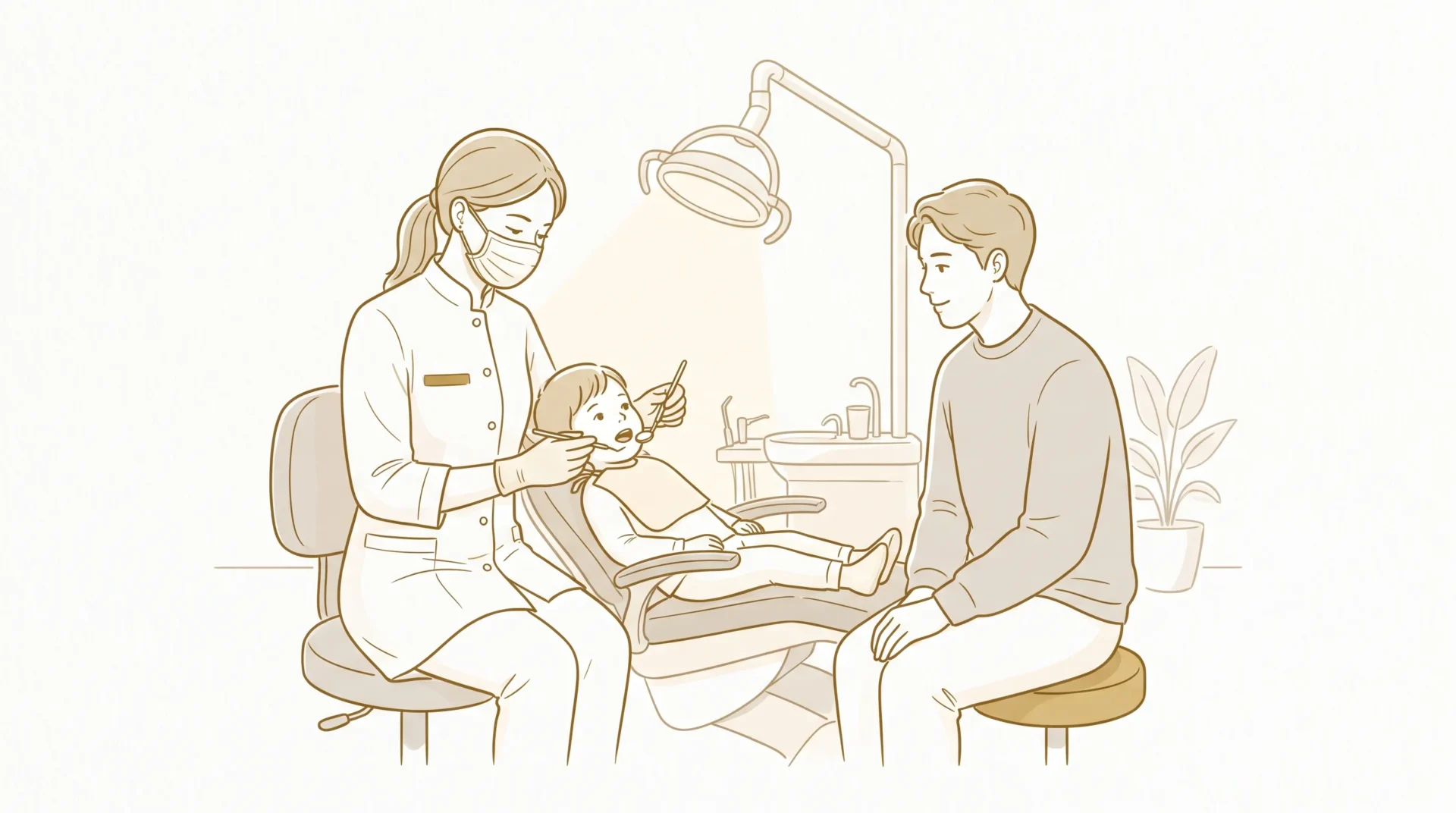
For babies and toddlers, a dental visit may include checking tooth eruption, discussing brushing with age-appropriate fluoride toothpaste, talking about bottles and snacks, and helping parents recognise early signs of decay. Short, calm visits can also help young children become familiar with the dental environment.
Preschool and primary school children
As children grow, dentists commonly look at tooth development, bite changes, brushing technique and diet patterns that may affect teeth. Some children may benefit from fissure sealants, which are protective coatings placed in the grooves of back teeth when clinically appropriate.
At this age, advice for parents is often practical. For example, many children still need help brushing well, especially at night. If you want home routines to support dental visits, Geelong Dental Centre has a guide to everyday dental care habits for the whole family.
Teenagers
Teenage dental care often involves changing habits, increased independence and new risks. Soft drinks, energy drinks, sports drinks, snacking, mouthguards for sport and wisdom tooth development may all come up during appointments.
Some teenagers may also ask about orthodontic options, including Invisalign aligners. Clear aligners are not suitable for everyone, and an assessment is needed to review tooth position, bite, oral hygiene and whether the aligners can be worn as directed.
Adults
For adults, routine dental care commonly focuses on gum health, tooth wear, cracks, decay, old restorations and oral cancer screening as part of the overall examination. Some adults attend because of a specific concern, such as bleeding gums, sensitivity, a chipped tooth or a change in how their teeth meet.
Cosmetic services may also be discussed by adults who want to understand options such as teeth whitening or veneers. These treatments have limitations. Whitening may not change the colour of fillings, crowns or veneers, and some people experience temporary sensitivity. Appearance-based care should be considered after oral health has been assessed.
Pregnancy and early parenthood
Pregnancy can affect oral health for some people, particularly if morning sickness, food aversions or gum inflammation make home care more difficult. Dental care during pregnancy can often be provided safely, but it is important to tell your dentist if you are pregnant or may be pregnant so timing, X-rays and treatment planning can be considered appropriately.
Early parenthood can also make dental appointments harder to organise. A family-focused approach can help by making prevention practical rather than idealised. Small routines that fit real life are usually more sustainable than complicated plans.
Older adults
Older adults may have different dental priorities, including dry mouth from medications, gum disease, worn teeth, loose dentures, missing teeth or difficulty cleaning around bridges and implants. Some people want to keep existing teeth comfortable for as long as possible, while others may want to discuss replacement options.
Dental implants, dentures, bridges or full-arch implant options may be considered in some missing-tooth situations. These options are not interchangeable. They differ in cost, maintenance, surgery, healing time, comfort, risks and long-term care needs. Your dentist can explain the advantages and limitations in the context of your health and preferences.
What a family dental appointment may involve
A family dental appointment is usually structured around assessment first, then discussion. The exact process depends on the reason for the visit, the person’s age and whether there are symptoms.
For a routine appointment, your dental team may ask about medical history, medications, allergies, previous dental experiences, current concerns and home care habits. They may then examine the teeth, gums, jaw, bite, soft tissues and existing dental work. X-rays may be recommended when they are clinically useful, such as to assess areas that cannot be seen directly.
Professional cleaning may be provided if appropriate. This can involve removing plaque and calculus, which is hardened plaque, from around the teeth and gumline. If gum inflammation or periodontal disease is suspected, more detailed gum assessment or staged care may be needed.
If you would like to understand what is commonly included, this guide explains what a dental check-up and clean usually includes in more detail.
Making dental care practical for a busy family
The challenge for many families is not understanding that dental care matters. It is finding a realistic way to fit it around school, work, sport, transport, budgets and different comfort levels.
It may help to keep a shared list of dental questions for each family member, especially if several people are overdue or have concerns. This can include tooth sensitivity, bleeding gums, mouthguards, grinding, whitening questions, wisdom teeth, children’s brushing habits or a broken filling.
Before accepting treatment, it is reasonable to ask:
- What is the diagnosis or likely cause of the problem?
- What options are available, including doing nothing for now if that is clinically reasonable?
- What are the potential benefits, risks and limitations of each option?
- What may happen if treatment is delayed?
- What costs, appointment times and maintenance are involved?
- Are there public programs, private health insurance benefits or payment options that may apply?
Clear communication is part of good care. You should have the opportunity to ask questions, understand fees and give informed consent before treatment proceeds, except in circumstances where urgent care is needed and choices are limited by the clinical situation.
Costs, public programs and access in Victoria
Dental costs vary because different people need different assessments, materials, appointment lengths and treatment plans. A check-up and clean is not the same as emergency treatment, root canal therapy, aligner treatment or implant planning. Where treatment is recommended, ask for a written treatment plan or estimate so you can consider your options.
Some children may be eligible for the Child Dental Benefits Schedule, which is administered by Services Australia and helps cover certain basic dental services for eligible children. Eligibility and benefit amounts can change, so it is best to check the current Services Australia information.
In Victoria, the Smile Squad program provides free dental care to students at Victorian government schools. Public and community dental services may also be an option for eligible patients. Private dental care, public programs and community clinics each have different roles, waiting times, eligibility requirements and service ranges.
Geelong Dental Centre offers online booking and flexible payment options. If costs are a concern, you can ask what information is available before treatment starts, and whether care can be staged where clinically appropriate.
When a dental concern should be assessed promptly
Some dental symptoms should not be left for a routine appointment weeks away. Prompt assessment may be appropriate if you or a family member has severe or persistent toothache, facial swelling, a knocked-out adult tooth, dental trauma, a broken tooth with pain, pus, fever or difficulty opening the mouth.
If swelling affects breathing or swallowing, seek urgent medical care. For dental injuries, keeping the tooth or fragment safe and contacting a dentist promptly can affect which options may be available. The right advice depends on whether the tooth is a baby tooth or adult tooth, and on the type of injury.
Emergency dental care aims to assess the cause, reduce immediate risk where possible and explain next steps. It may not always involve completing definitive treatment on the same day, particularly if infection, complex fractures or medical considerations are involved.
Frequently Asked Questions
Are family dental services only for children? No. Family dental services usually refer to dental care for people at different life stages, including children, teenagers, adults and older adults. The type of care recommended should depend on the individual person, not simply their age.
How often should my family have dental check-ups? The right interval varies. Some people may be advised to attend every six months, while others may be reviewed at different intervals depending on decay risk, gum health, medical history, symptoms and past dental treatment. Your dentist can recommend a recall schedule after an assessment.
When should my child first see a dentist? The Australian Dental Association advises a first dental visit when the first tooth appears or by around 12 months of age, whichever comes first. Early visits can help parents receive tailored advice about brushing, feeding habits and tooth development.
Can a family dentist help with cosmetic concerns too? In many cases, yes. A dentist can assess oral health first, then discuss whether options such as whitening, veneers or aligners may be suitable. Cosmetic treatment is optional, and results, risks, costs and maintenance should be discussed before deciding.
What if someone in my family feels nervous about dental visits? Let the dental team know when booking or at the start of the appointment. Anxiety is common, and appointments can often be approached with extra explanation, breaks and consent-based communication. The most suitable approach depends on the person and the care needed.
Can several dental concerns be discussed in one appointment? Often, yes, although complex concerns may need separate appointments or staged planning. A dentist may prioritise urgent issues first, then discuss preventive, restorative or cosmetic options once the mouth has been assessed.
Discuss family dental care in Geelong
A dental examination can help identify what is happening in your mouth and which options may be appropriate for your circumstances. If you are looking into family dental services in Geelong, you can book an appointment with Geelong Dental Centre to discuss routine care, a specific concern or treatment planning for different family members.
Disclaimer
The information provided on this website is for general informational and educational purposes only. It is not intended to replace professional dental advice, diagnosis or treatment. Dental needs and treatment outcomes vary between individuals. Always seek advice from a qualified dental practitioner regarding your specific circumstances before making decisions about your oral health or treatment. A consultation and clinical assessment are required to determine which treatment options may be suitable for you. All dental procedures carry potential risks and benefits, which will be discussed with you before treatment.