

What to Expect When Visiting a Geelong Dentist
19 August 2026 | General Dentistry, Oral Health, Preventative Dentistry
If you have searched for dentist Geelong because you are unsure what happens at an appointment, you are not alone. Many people want to know whether the visit will be a simple check-up, whether X-rays might be needed, how treatment options are explained, and what they can ask before making a decision.
A dental visit should help you understand your oral health, not pressure you into treatment. The exact appointment depends on your reason for visiting, your dental history and what your dentist finds during an examination.
Dentist Geelong appointments: what usually happens
Most dental appointments follow a fairly predictable structure, although emergency visits and complex treatment consultations may differ. At Geelong Dental Centre, appointments may include general dentistry, emergency dental care, children’s dentistry, cosmetic consultations, Invisalign discussions, dental implant assessments and other forms of restorative care, depending on your needs.
Here is a simple overview of what may happen at a first or routine dental visit.
| Stage of the visit | What it usually involves | Why it matters |
|---|---|---|
| Booking and arrival | Confirming your details, reason for visit and health information | Helps the dental team prepare appropriately |
| Discussion | Talking about symptoms, concerns, past dental treatment and goals | Gives context before any examination |
| Examination | Checking teeth, gums, bite, soft tissues and existing dental work | Helps identify concerns that may need attention |
| X-rays or photos | Taken only when clinically appropriate | May show issues that are not visible during a visual exam |
| Advice and options | Explanation of findings, possible next steps, risks, benefits and alternatives | Supports informed decisions |
| Treatment planning | Fees, timing, priorities and payment options may be discussed | Helps you understand what is recommended and why |
Not every appointment includes all of these steps. For example, an emergency dental visit may focus first on the immediate concern, while a cosmetic or implant consultation may involve a more detailed discussion about suitability, expectations and treatment planning.
Before your appointment: booking and what to bring
When you book, it can help to mention the main reason for your visit. For example, you might be due for a check-up, have a broken tooth, be considering teeth whitening, or want to ask about clear aligners. This helps the clinic allocate the right appointment type where possible.
If you are new to the clinic, you may be asked about your medical history. This is important because some health conditions, medications, allergies, pregnancy, smoking history and previous dental experiences can affect treatment planning.
It is useful to bring:
- A list of current medications, including supplements if relevant
- Details of any allergies or previous reactions to dental treatment
- Your private health insurance card, if you have one
- Any recent dental X-rays or referral letters, if available
- Questions you would like answered during the appointment
If you are bringing a child, you may also want to mention whether it is their first dental visit, whether they have any dental pain, or whether they feel nervous in healthcare settings. Family appointments often work best when the dentist understands the child’s age, communication needs and previous experiences. For more general guidance on dental care across different life stages, Geelong Dental Centre has also written about how family dental care supports healthy smiles at every age.
Arrival, communication and comfort
At the clinic, you can expect to confirm your details and complete any necessary forms. If you feel anxious, have a sensitive gag reflex, dislike certain sounds, or have had a difficult dental experience in the past, it is reasonable to mention this before the examination begins.
Good communication is a major part of a comfortable appointment. Your dentist can explain what they are checking, pause if needed and discuss options before treatment starts. You can ask for information in plain language, including what is urgent, what can be monitored and what choices may be available.
The physical setting also matters. Lighting, privacy, room layout and noise can all influence how easy it is to relax and follow a conversation. Outside dentistry, many professional environments use acoustic solutions for professional spaces to reduce distracting noise and improve communication. In a dental clinic, the same general principle applies: a calmer environment can make it easier for patients to listen, ask questions and understand their care.
If you are comparing local practices, you may also find it useful to read about what to look for in a modern dental practice, including communication, prevention-focused care and appropriate technology.
What the dental examination may include
A dental examination is more than a quick look at your teeth. Your dentist may assess your teeth, gums, bite, jaw joints, soft tissues and any existing fillings, crowns, bridges or dentures. They may ask about pain, sensitivity, bleeding gums, dry mouth, tooth grinding, snoring, diet, brushing habits and previous dental treatment.
Common parts of the examination may include checking for tooth decay, cracks, worn enamel, gum inflammation, plaque build-up, loose teeth or changes around older dental work. Your dentist may also examine the soft tissues of your mouth, including the tongue, cheeks and palate, and may ask about any ulcers, lumps or areas that have changed.
This examination does not mean treatment will automatically be recommended. Sometimes the best approach may be monitoring an area, improving home care, reviewing your bite, or arranging a follow-up assessment. If treatment is suggested, you can ask why it is recommended and what may happen if you choose to delay or decline it.
General patient information from healthdirect on dental care may also be useful if you want to understand routine dental care and when professional advice may be needed.
Dental X-rays, scans and photos
Dental X-rays, also called radiographs, are not taken at every appointment. They may be recommended when your dentist needs more information than can be seen during a visual examination. For example, X-rays may help assess decay between teeth, bone levels around teeth, tooth roots, wisdom teeth, infection, previous root canal treatment or suitability for certain procedures.
Dental X-rays involve radiation exposure, so they should be taken only when the expected diagnostic benefit is considered appropriate for your individual situation. If an X-ray is recommended, you can ask what it is looking for and how it may affect your options.
Photos or digital scans may also be used in some appointments. These can help document tooth wear, crowding, bite concerns, cosmetic planning or changes over time. They can also make explanations easier because you can see what the dentist is describing.
Cleaning and preventive advice
If you have booked a check-up and clean, your appointment may include removal of plaque and hardened deposits, often called calculus or tartar. This is commonly followed by polishing and tailored advice on brushing, flossing, interdental brushes, fluoride toothpaste or other preventive steps.
Not everyone needs the same preventive plan. Someone with a higher risk of tooth decay, gum disease, dry mouth, orthodontic appliances or multiple restorations may need different advice from someone with low dental risk. Your dentist or dental hygienist can explain what applies to your circumstances.
Teeth cleaning may feel different from person to person. Some people have sensitivity, gum tenderness or anxiety about the sound of dental instruments. If you are uncomfortable, let the dental team know so they can discuss options that may assist.
If treatment is recommended
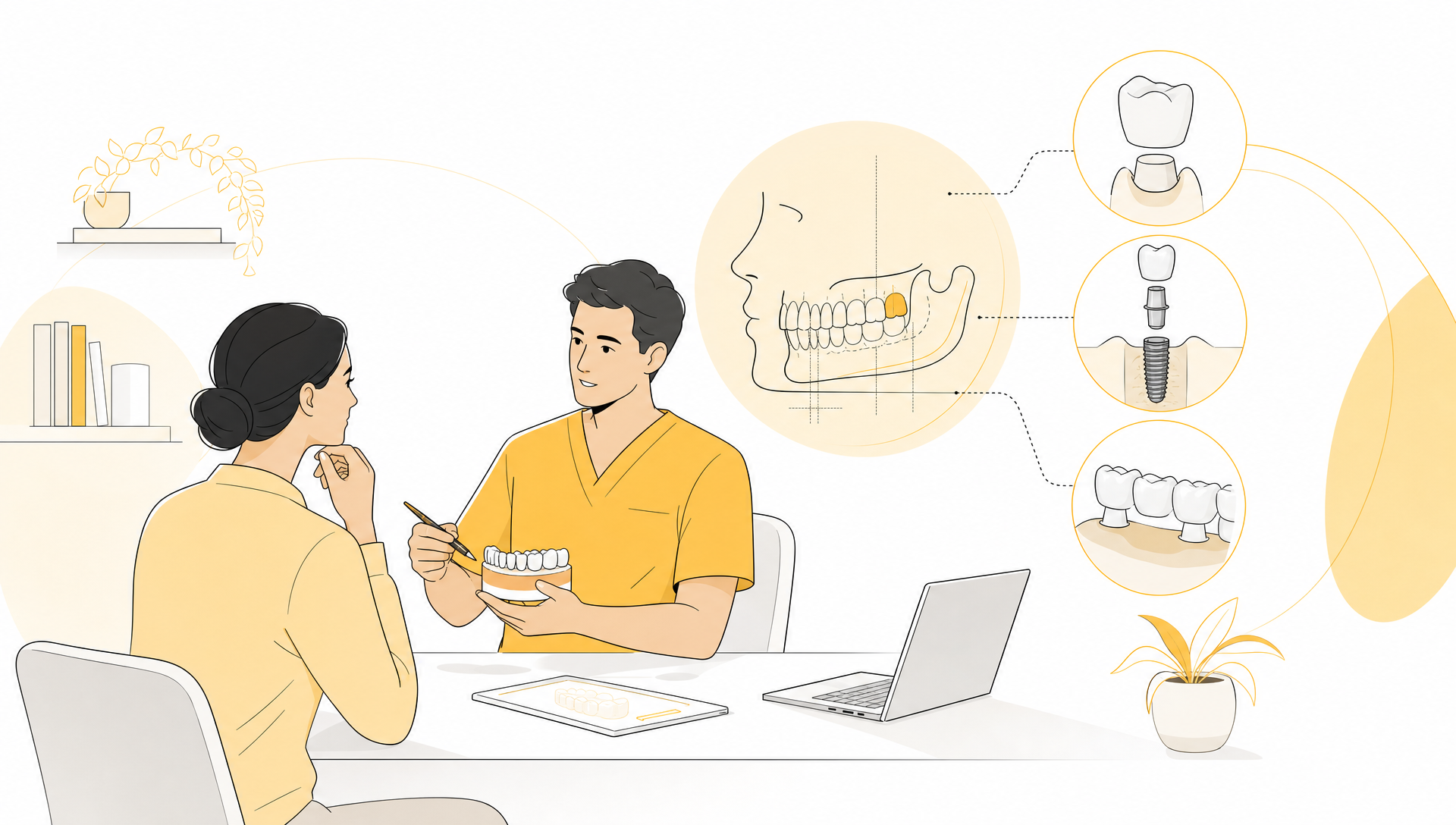
If your dentist identifies an issue, the next step should be an explanation of the findings and your available options. Depending on the situation, options may include monitoring, preventive care, a filling, a crown, root canal treatment, extraction, replacement options such as a denture, bridge or implant, or referral for more specialised assessment.
For cosmetic concerns, options may include teeth whitening, veneers, bonding, crowns or clear aligners, depending on your oral health and goals. Cosmetic treatment is a personal choice. Natural differences in tooth colour, shape and alignment are common, and treatment should not be presented as necessary unless there is a clinical reason.
For Invisalign or other clear aligner discussions, your dentist may assess tooth position, bite, gum health and whether aligners are likely to be suitable. For dental implants or All-on-4 treatment, assessment may involve the condition of the gums, available bone, bite, medical history, smoking status and long-term maintenance needs.
All dental procedures carry potential benefits, risks and limitations. Treatment outcomes, recovery and experiences vary between patients. Before agreeing to treatment, it is appropriate to ask about alternatives, likely appointment stages, aftercare, fees and what may happen if no treatment is undertaken.
Fees, payment options and informed consent
Dental fees vary depending on the treatment, materials, complexity, appointment time and whether additional imaging or follow-up visits are needed. If treatment is recommended, you can ask for an itemised estimate and clarification about what is included.
If you have private health insurance, the amount you may receive back depends on your policy, annual limits, waiting periods and the item numbers used. The clinic may be able to help you understand the dental item numbers, but your health fund is responsible for confirming your rebate.
Geelong Dental Centre offers flexible payment options, and these can be discussed before treatment begins. It is reasonable to take time to consider your options, especially for more complex treatment such as crowns, implants, orthodontic aligners or full smile restoration.
Informed consent means you have been given enough information to make a decision that suits your circumstances. This includes the nature of the treatment, possible benefits, material risks, alternatives, costs and the option of not proceeding.
If you are visiting for a dental emergency
A dental emergency appointment is usually focused on assessing the cause of symptoms and discussing appropriate next steps. Symptoms that may need prompt dental advice include facial swelling, dental trauma, severe toothache, a knocked-out adult tooth, uncontrolled bleeding, spreading infection signs, or pain that is not manageable with usual self-care.
Emergency care does not always mean definitive treatment can be completed in one visit. Sometimes the first appointment may involve examination, X-rays, pain management advice, temporary repair, antibiotics where clinically indicated, or referral if the situation requires it. Your dentist can explain what is being done and what follow-up may be needed.
If you have swelling affecting breathing, swallowing, vision, or general health, urgent medical assessment may be required. In those situations, dental advice should not replace emergency medical care.
Visiting for cosmetic dentistry, implants or aligners
Many people visit a Geelong dentist because they want to understand whether cosmetic or restorative options may suit them. A consultation is an opportunity to discuss concerns such as stained teeth, chipped edges, missing teeth, gaps, crowding or worn teeth in a measured way.
Before recommending cosmetic treatment, a dentist generally needs to assess oral health first. Active tooth decay, gum disease, grinding, unstable bite issues or untreated infection may need attention before cosmetic work is considered. This is because cosmetic and restorative treatments rely on healthy supporting teeth and gums.
For treatments such as whitening, veneers, crowns, implants and aligners, suitability depends on your individual circumstances. Your dentist can explain what may be realistic, what maintenance may be needed and what limitations apply. No treatment can guarantee a particular appearance or experience.
If you are still deciding where to book, this guide to choosing a dental clinic in Geelong may help you compare communication, services, convenience and care approach without relying only on advertising claims.
How often should you visit a dentist?
There is no single appointment interval that suits every person. Some people may be advised to attend around every six months, while others may be better suited to a different schedule depending on their oral health, gum condition, decay risk, medical history and past treatment.
A person with active gum disease, frequent decay, dry mouth, complex restorations or orthodontic appliances may need more frequent review. Someone with stable oral health may be advised differently. Your dentist can explain the recall interval that is appropriate for you and why.
The aim is not to over-service or treat unnecessarily. Regular dental care is mainly about early identification, prevention and helping you make informed decisions before small concerns become more complex.
Questions you can ask at your appointment
It is normal to forget questions during an appointment, especially if you feel nervous. Writing them down beforehand can help.
Useful questions include:
- What have you found during the examination?
- Is this urgent, or can it be monitored?
- What are the benefits, risks and limitations of each option?
- What happens if I choose not to proceed now?
- What costs, appointments and aftercare may be involved?
- Are there alternatives that may suit my circumstances?
A good discussion should leave you with a clearer understanding of your oral health and the choices available to you. If you need more time, it is appropriate to ask for written information or a treatment estimate before deciding.
Frequently Asked Questions
Will my first dental visit include treatment? Not always. A first visit may involve examination, discussion, X-rays if clinically appropriate and advice. Treatment may be offered on the day in some situations, but more complex care often requires planning and a separate appointment.
Do I need X-rays at every dental appointment? No. X-rays are recommended based on your symptoms, dental history, risk factors and what your dentist needs to assess. You can ask why an X-ray is suggested and how it may guide your care.
What if I feel nervous about seeing a dentist? Let the clinic know when booking or when you arrive. Your dentist can explain what is happening, check in with you during the appointment and discuss comfort options where appropriate. Experiences vary, so sharing your concerns is helpful.
Can I bring my child to the same dental clinic? Geelong Dental Centre provides children’s dentistry as part of its services. A child’s appointment may focus on prevention, checking growth and development, discussing brushing and diet, and helping them become familiar with dental care.
What should I do if I have tooth pain or swelling? Tooth pain, swelling, trauma or symptoms that are worsening should be assessed by a dentist promptly. If swelling affects breathing, swallowing or your general health, seek urgent medical care.
Arranging a dental visit in Geelong
A dental examination can help determine the cause of your symptoms, assess your oral health and explain which options may be appropriate. Whether you are due for a check-up, have a dental concern, or want to discuss general, cosmetic or implant dentistry, the team at Geelong Dental Centre can talk through your needs in a clear and practical way.
You can contact Geelong Dental Centre to arrange an appointment in Geelong, including if you are travelling from nearby areas such as Newtown, Geelong West, East Geelong, Belmont or Highton. Your dentist can assess your situation and explain the potential benefits, risks and alternatives before any treatment is planned.
Disclaimer
The information provided on this website is for general informational and educational purposes only. It is not intended to replace professional dental advice, diagnosis or treatment. Dental needs and treatment outcomes vary between individuals. Always seek advice from a qualified dental practitioner regarding your specific circumstances before making decisions about your oral health or treatment. A consultation and clinical assessment are required to determine which treatment options may be suitable for you. All dental procedures carry potential risks and benefits, which will be discussed with you before treatment.